
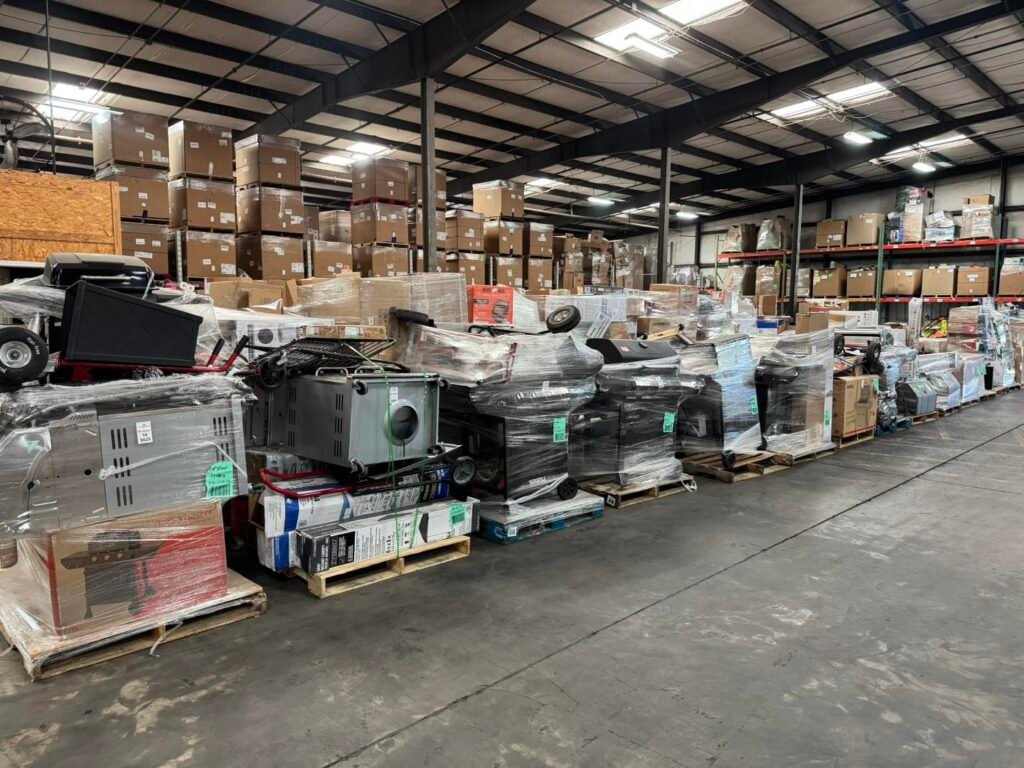
How to start a liquidation pallet business is one of the most searched questions by people looking to build a profitable resale side hustle. With major retailers offloading returned and overstock inventory daily, this model gives beginners access to low-cost products with strong resale potential.
If done right, a pallet reselling business can generate consistent cash flow with relatively low startup costs. This guide breaks down the exact steps, tools, and strategies you need to launch successfully in the USA or internationally. How to Start a Liquidation Pallet Business
What Is a Liquidation Pallet Business?
A liquidation pallet business involves buying bulk returned, overstock, or shelf-pulled goods from retailers and reselling them individually for profit.
Common sources of pallets:
- Retail returns (Amazon, Walmart, Target)
- Overstock inventory
- Shelf pulls (unsold items removed from shelves)
Typical product categories:
- Electronics
- Clothing
- Home goods
- Tools
- Health & beauty
This model works because retailers prefer recovering partial value rather than storing unsold goods.
Why This Business Model Works
Understanding how to make money with liquidation pallets starts with recognizing the margin opportunity.
Key advantages:
- Low cost per item (bulk buying reduces price)
- High resale margins (2x–10x possible)
- Flexible selling channels (eBay, Facebook, local markets)
Example:
- Buy pallet for $600
- Sell items individually for $1,500+
- Profit margin: $700–$900
This is why it’s one of the fastest-growing resale models.
Step 1: Understand the Market Before You Start
Before learning how to start a liquidation pallet business, research what sells fast in your target market.
High-demand categories:
- Small electronics (headphones, accessories)
- Tools and hardware
- Branded clothing
- Home essentials
Pro Tip:
Avoid oversized or fragile items at the beginning—they increase shipping risks and costs.
Step 2: Choose the Right Type of Pallets
Not all pallets are equal. Your success depends heavily on what you buy.
Types of pallets:
- Manifested pallets (you see item list before buying)
- Unmanifested pallets (mystery boxes, higher risk)
- Shelf pulls (usually best condition)
Beginner recommendation:
Start with manifested pallets to reduce risk.
This is especially important in a pallet reselling business for beginners where mistakes can be costly.
Step 3: Find Reliable Suppliers
A critical part of starting a resale business USA is choosing legitimate suppliers.
Look for:
- Verified liquidation companies
- Transparent manifests
- Real warehouse locations
- Clear return/refund policies
Avoid:
- “Too cheap” offers (common scam signal)
- No contact details
- No business registration
Expert Tip:
Always test with a small order before scaling.
Step 4: Calculate Costs and Profit Potential
Many beginners fail because they ignore hidden costs.
Include:
- Cost of pallet
- Shipping or freight
- Storage
- Cleaning/testing items
- Selling fees
Simple profit formula:
Total resale value – total costs = profit
Example breakdown:
- Pallet: $800
- Shipping: $200
- Total: $1,000
- Resale value: $2,200
- Profit: $1,200
This step determines whether your business survives long-term.
Step 5: Set Up Your Sales Channels
To succeed in how to start a liquidation pallet business, you need reliable selling platforms.
Best platforms:
- Facebook Marketplace (fast local sales)
- eBay (wider audience)
- Flea markets / local shops
- Instagram or WhatsApp
Strategy:
- Sell fast-moving items individually
- Bundle slow-moving items
- Offer discounts for bulk buyers
Step 6: Inspect, Sort, and Price Inventory
Once you receive your pallet:
Do this immediately:
- Open and inspect items
- Test electronics
- Separate into categories:
- New
- Like new
- Used
- Damaged
Pricing rule:
- New items → 70–80% retail
- Used → 40–60% retail
- Damaged → clearance pricing
This step directly impacts your profitability.
Step 7: Build Trust and Scale
If you want long-term success, focus on reputation.
Build trust by:
- Being honest about item condition
- Offering fair pricing
- Providing quick responses
Scaling strategies:
- Reinvest profits into more pallets
- Move from pallets to truckloads
- Focus on one niche (electronics, clothing, etc.)
Real-World Example
A beginner in Texas started with a $500 pallet of mixed electronics.
Results:
- Sold items on Facebook Marketplace
- Generated $1,400 revenue
- Reinvested profits into 3 pallets
Within 3 months, they transitioned into consistent weekly inventory sales.
This shows how scalable a pallet reselling business for beginners can be when done correctly.
Common Mistakes to Avoid
Avoid these if you want success:
- Buying without research
- Ignoring shipping costs
- Choosing unverified suppliers
- Overpricing items
- Not testing products
These mistakes are the main reason people fail early.
Expert Tips for Faster Results
- Start small and scale gradually
- Focus on high-demand items
- Track every expense
- Build repeat customers
- Learn basic product testing
Most importantly, treat this like a real business, not a gamble.
Conclusion
Learning how to start a liquidation pallet business gives you access to one of the most practical and scalable resale opportunities available today. With the right sourcing, pricing, and sales strategy, you can turn low-cost inventory into consistent profit.
Start small, stay consistent, and reinvest wisely—this is how successful sellers grow from a single pallet into a full resale operation.
FAQ
1. What is a liquidation pallet business?
A liquidation pallet business involves buying bulk returned or overstock goods and reselling them individually for profit.
2. How much money do I need to start?
Most beginners start with $500–$1,500 depending on pallet type and shipping costs.
3. Is this business profitable?
Yes, profits can range from 30% to 100% or more depending on sourcing and sales strategy.
4. Where can I sell pallet items?
Popular platforms include Facebook Marketplace, eBay, and local markets.
5. Are liquidation pallets risky?
There is some risk, but buying manifested pallets and working with trusted suppliers reduces it significantly.
[NEXForms id=”1″]