
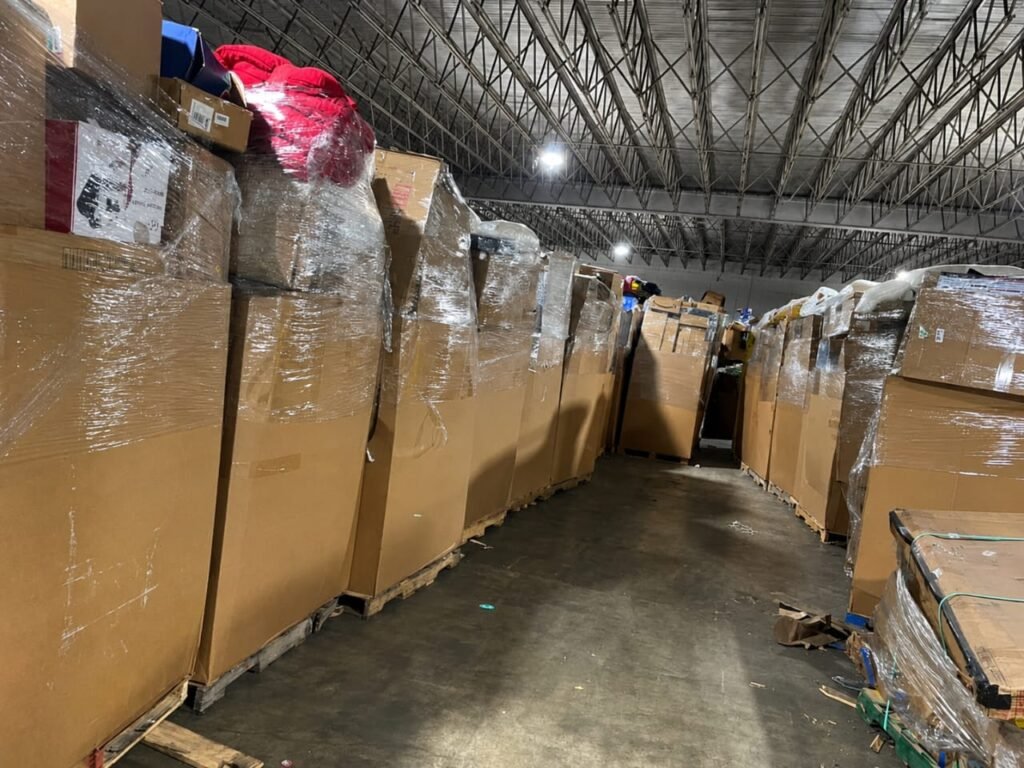
Sourcing bulk inventory from top-tier retailers has become the cornerstone strategy for building a scalable e-commerce or local retail business. As the resale market matures in 2026, broad-stroke advice no longer cuts it. For modern liquidation entrepreneurs, the single most consequential decision is choosing the right inventory stream — specifically, evaluating walmart liquidation pallets vs amazon return pallets.
Both retail giants handle billions of dollars in returns, overstock, and shelf-pull merchandise every year. Yet their internal logistics, product mixes, brand compositions, and damage profiles are fundamentally different. Picking the wrong source can lock up your capital in unsellable inventory, inflate your logistical overhead, and erode your margins before you ever list a single item.
At Prime Source Pallets, we help resellers navigate these complexities every day. This comprehensive guide breaks down the mechanics of both Walmart and Amazon bulk lots, giving you the clarity to deploy your capital into the asset class that matches your warehouse space, sales channels, and long-term profitability goals.
Understanding the Core Sourcing Dilemma
To properly evaluate walmart liquidation pallets vs amazon return pallets, you have to look past the shrink wrap and understand the supply chains feeding each pipeline.
Walmart operates one of the largest brick-and-mortar retail networks on the planet. Their liquidation flow originates from over 10,000 stores and massive regional distribution centers. The inventory skews toward recognizable household brands, heavy domestic goods, automotive supplies, and seasonal outdoor products. These lots typically move through official auction channels or verified primary wholesalers, often with detailed manifests attached.
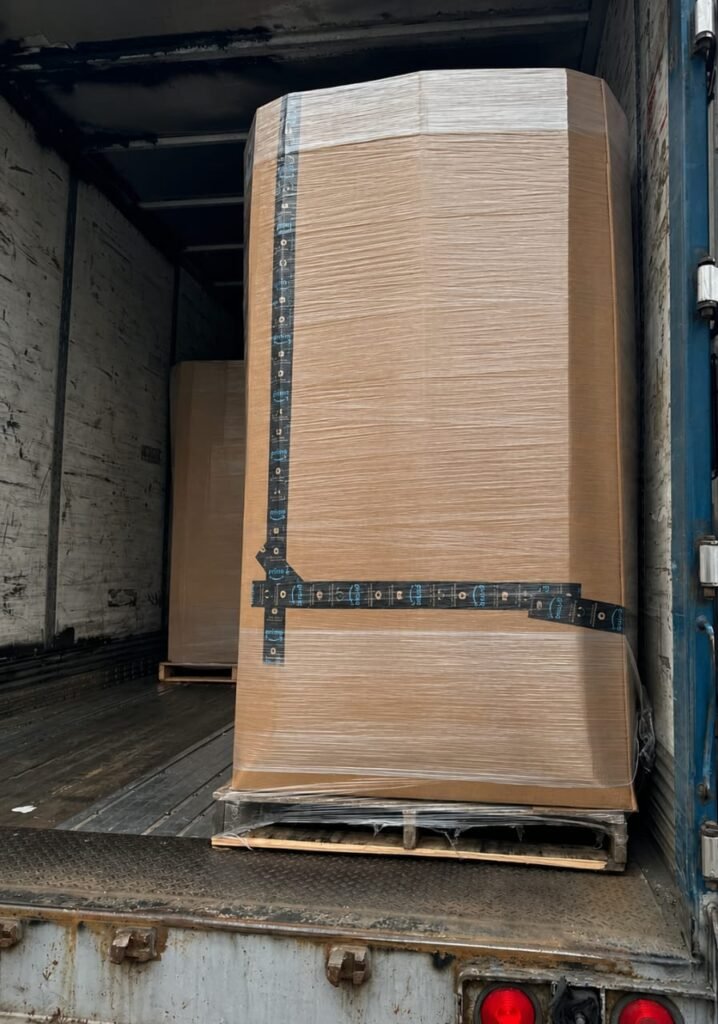
Amazon, by contrast, is a fluid, multi-seller digital marketplace. A typical Amazon return pallet contains a wild mix of direct retail items, third-party FBA (Fulfillment by Amazon) products, international imports, small tech accessories, and fashion goods. The sheer volume Amazon processes creates a faster-moving, less predictable inventory stream.
Understanding these structural differences is non-negotiable. Your success depends on how well you evaluate manifest transparency, inventory grading standards, transport constraints, and post-processing requirements before you ever place a bid.
Deep Dive: Walmart Liquidation Pallets
Walmart’s liquidation supply chain is built for speed and scale. The company needs to clear massive volumes of brick-and-mortar and dot-com inventory quickly, which creates both opportunities and constraints for resellers.
Manifest Transparency and Predictability
One of the biggest advantages of sourcing Walmart liquidation pallets is manifest clarity. Lots sourced directly from Tier 1 platforms or verified B2B clearinghouses generally include itemized documentation. These manifests provide line-by-line transparency, often detailing:
- Universal Product Codes (UPCs)
- Manufacturer part numbers
- Original Manufacturer Suggested Retail Price (MSRP)
- Standardized retail classifications and department codes
This level of detail allows experienced buyers to calculate potential gross margins using historic market data before they commit capital. If you are running a tight operation with limited cash flow, this predictability is a major advantage. You can browse our full selection of Walmart Return Pallets for Sale to see current manifest availability.
Core Product Strengths
Walmart inventory excels in specific, high-ticket retail categories that draw strong local demand:
Large Domestic Appliances: Microwaves, mini-refrigerators, portable AC units, and vacuum cleaners. These items carry high MSRP values and move quickly through Facebook Marketplace and local classifieds.
Lawn, Garden & Patio Equipment: Grills, lawnmowers, pressure washers, and outdoor power tools. If you have the warehouse space, these categories deliver some of the highest per-unit profits in the liquidation world.
Toys & Seasonal Goods: Major brand toys, bicycles, and holiday displays. Our Walmart Toy Pallets are especially popular with resellers who feed discount stores or seasonal pop-up shops.
Automotive & Hardware: Floor jacks, car batteries, and comprehensive tool sets. These appeal to a dedicated buyer base willing to pay cash for functional, name-brand gear.
For resellers who want cleaner segmentation, targeted lots like Walmart General Merchandise Pallets offer more focused inventory than broad mixed retail lots.
Sourcing Mechanics and Pricing
Legitimate Walmart sourcing avoids secondary brokers who often “cherry-pick” high-value items before repackaging the leftovers. Primary acquisition happens through official channels where registered buyers use valid resale certificates to purchase single pallets or full truckloads (typically 24 to 26 pallets per load).
Pricing varies significantly based on composition. A pallet of mixed apparel or soft goods may start around $400, while high-demand electronics or power tool lots can command $1,500 to $2,900. If you are ready to scale, explore our Walmart Liquidation Wholesale options and Walmart Return Pallet Sales for current availability.
Deep Dive: Amazon Return Pallets
Amazon’s return pipeline is the largest of its kind in the world. The volume is staggering, but that scale introduces a unique set of operational dynamics that every reseller must understand.
The Nature of “Mystery” Inventory
While some Amazon warehouse pallets offer clean manifests, a significant portion of Amazon’s customer return stream is sold unmanifested or semi-manifested. Buyers frequently bid based on broad category descriptions like “Small Electronics” or “Home Improvement Goods” alongside an estimated item count.
This creates a wider outcome distribution. Some pallets contain high-value brand-name items like Apple accessories, Dyson vacuums, or premium kitchenware. Others consist largely of low-cost private-label goods with thin margins. If you thrive on the treasure-hunt model and have the operational bandwidth to process high SKU counts, this variability can be profitable. Check out our Amazon Mystery Pallets if you want to explore this sourcing style.
Core Product Strengths
The structural advantages of Amazon inventory center around item density, small dimensions, and digital sales velocity:
Consumer Tech Accessories: Headphones, smartwatches, charging cables, and Bluetooth speakers. These items are small, lightweight, and perfectly suited for e-commerce fulfillment.
Small Domestic Wares: Kitchen gadgets, specialized lighting, and personal care appliances. These products turn over quickly on platforms like eBay and Poshmark.
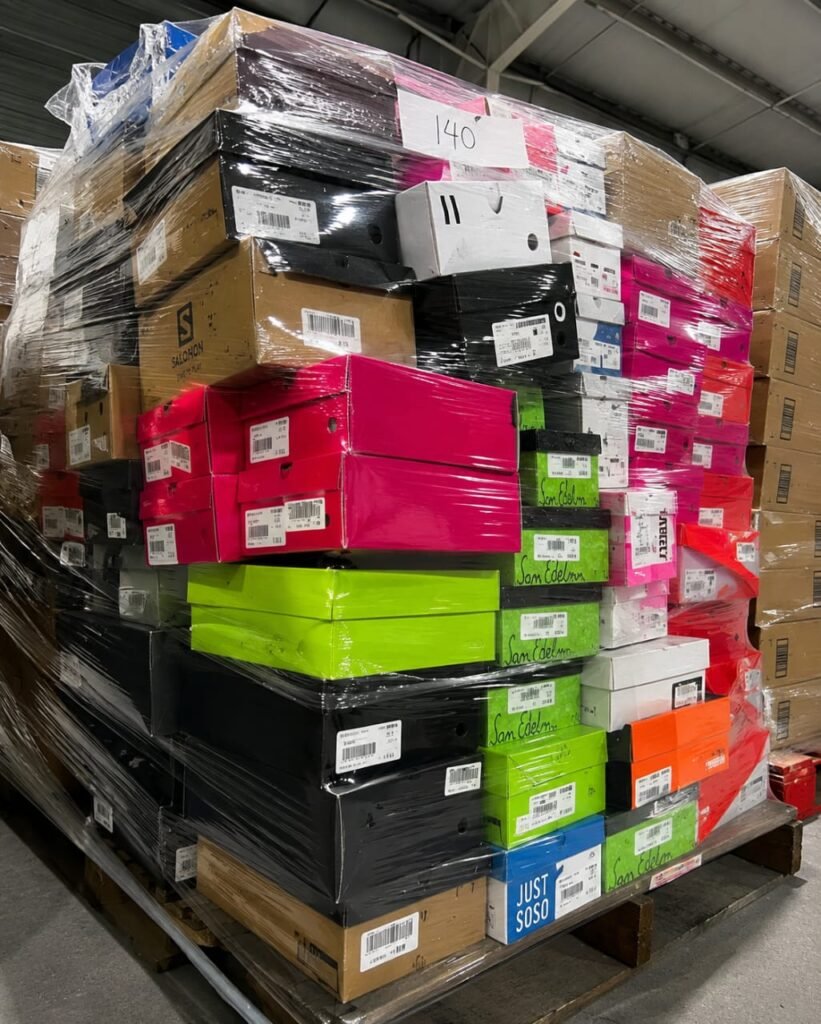
Apparel & Footwear: High return rates in fashion create a steady supply of clothing and shoes. If you know how to grade and photograph garments, this category offers consistent volume.
The higher item count per pallet makes Amazon returns popular for high-volume sales models. You can browse available stock through our Amazon Return Pallets collection and Amazon Bulk Liquidation Pallets listings.
Sourcing Mechanics and Pricing
Amazon inventory moves through official B2B portals and primary liquidation platforms. Pallet prices scale based on estimated box value and item density, typically ranging from $500 for mixed housewares to over $3,500 for targeted electronics lots. For resellers looking to move serious volume, we also offer Amazon Truckload Pallets for Sale and Amazon Unclaimed Pallets.
If you want to understand exactly what you are getting before you buy, read our detailed breakdown on What Comes Inside Amazon Return Pallets.
Head-to-Head Comparison: Walmart vs. Amazon
| Feature / Metric | Walmart Liquidation Pallets | Amazon Return Pallets |
|---|---|---|
| Manifest Availability | High — Detailed itemized manifests are standard | Moderate to Low — Frequently unmanifested or item-count only |
| Average Unit Size | Large / Bulky — Requires pallet jacks and trucks | Small / Medium — Easier to store and pack |
| Brand Recognition | High — National brands, direct retail lines | Variable — Mix of premium brands and direct imports |
| Historical “Trash Rate” | ~30% to 35% average salvage/scrap rate | ~25% to 40% (Highly dependent on category) |
| Optimal Resale Channels | Local markets, storefronts, regional classifieds | E-commerce platforms, discount bin stores |
| Sourcing Cost Entry Point | $400 – $2,900 per single pallet unit | $500 – $3,500+ per single pallet unit |
| Storage Requirements | Commercial space, loading dock, pallet jacks | Garage, basement, or small warehouse |
| Shipping Feasibility | Heavy items favor local pickup / delivery | Small items ship easily via USPS, UPS, FedEx |
This comparison makes one thing clear: there is no universal “best” choice. The right inventory stream depends entirely on your operational reality.
Actionable Operational Strategies
To protect your capital when navigating walmart liquidation pallets vs amazon return pallets, you must implement structured operational controls from day one.
1. Execute the Landed Cost Formula
Never calculate your bids based solely on the raw acquisition price. Always apply the following formula to determine your true investment threshold:
Landed Cost = Pallet Price + Freight + Processing Labor + Storage + Packaging Materials + Platform Fees
If your calculated total landed cost exceeds 20% to 25% of the total verified MSRP listed on the manifest, your potential profit margin may be too thin to absorb inevitable product damage rates. For a deeper look at building profitable systems, read our guide on How to Buy Liquidation Pallets.
2. Implement a Standard Grading Workflow
When a pallet arrives at your facility, process it immediately using a four-tier grading system:
- Grade A (Factory Sealed / Open-Box Mint) → List on premium e-commerce platforms at full market value.
- Grade B (Gently Used / Cosmetic Blemish) → Sell on secondary marketplaces or through local discount channels.
- Grade C (Defective / Salvage For Parts) → Bundle into repair lots or sell as-is to parts buyers.
- Grade D (Complete Loss / Scrap) → Immediate write-off; do not let dead inventory clutter your workspace.
This grading discipline is what separates hobbyists from full-time resellers. If you are just starting out, our article on Liquidation Pallet Mistakes covers the most common grading errors and how to avoid them.
3. Match Inventory to Your Storage Capabilities
If your business operates out of a residential space, such as a garage or basement, stick to small-format items like those found in electronics-focused return lots. Bulky inventory requires dedicated commercial storage, specialized docks, and proper material handling equipment like pallet jacks. Trying to store a refrigerator pallet in a two-car garage is a fast path to operational frustration.
Real-World Reselling Dynamics: Matching Inventory to Channel
Long-term profitability relies on matching your inventory type to your chosen sales channels.
Consider the operational model of a brick-and-mortar discount store in a suburban commercial zone. This business benefits from heavy, highly visible items. Stocking brand-name overstock like lawnmowers, power tools, or patio furniture draws local foot traffic and simplifies regional sales. For this model, sourcing clean, predictable stock like Walmart Overstock Pallets helps maintain reliable retail margins.
Conversely, e-commerce sellers working out of smaller facilities need a high volume of compact, shippable items. Sourcing unmanifested general merchandise lots from major online marketplaces provides the steady stream of small tech accessories, lifestyle items, and consumer electronics needed to feed fast-moving online storefronts on eBay, Amazon, and Mercari.
Understanding these dynamics helps business owners pick the right side of the walmart liquidation pallets vs amazon return pallets debate. For an in-depth profitability analysis, read Are Walmart Return Pallets Worth It? and Are Amazon Return Pallets Worth It?.
Which Inventory Stream Is Right for Your Business?
When choosing between walmart liquidation pallets vs amazon return pallets, the right option depends on your infrastructure, risk tolerance, and sales strategy.
Choose Walmart Liquidation Pallets if:
- You have commercial warehouse space with a loading dock
- You prefer clear manifests and predictable inventory
- You sell through local channels, flea markets, or discount storefronts
- You want high-ticket items with strong brand recognition
- You have the equipment to handle bulky goods
Choose Amazon Return Pallets if:
- You operate from a smaller space and need compact, shippable items
- You are comfortable with unmanifested inventory and variable outcomes
- You sell primarily through e-commerce platforms
- You want high SKU density to feed a high-volume listing strategy
- You run a discount bin store or treasure-hunt retail model
Many successful resellers eventually diversify into both streams, using Walmart lots to anchor their local sales and Amazon lots to keep their online storefronts stocked with fast-moving SKUs. If you are ready to scale, explore our Truckload Liquidation options for volume pricing on both Walmart and Amazon inventory.
Frequently Asked Questions
Which has better manifest accuracy when comparing walmart liquidation pallets vs amazon return pallets? Walmart liquidation pallets generally provide higher manifest accuracy. Their lots are typically processed through structured distribution systems that generate itemized manifests detailing UPCs and retail values. Amazon return pallets are more frequently sold unmanifested or with simple item counts.
Can I safely ship individual items found inside retail liquidation pallets via standard parcel post? Amazon return lots generally contain smaller, lighter items that are well-suited for standard parcel shipping via USPS, UPS, or FedEx. Walmart lots frequently contain heavy, oversized consumer goods that are more cost-effective to sell locally to avoid high shipping fees.
What is the average percentage of broken items found in these wholesale lots? Both sourcing streams carry an average historical defect or “trash rate” of 25% to 45%. This includes items with broken components, cosmetic damage, or missing essential accessories. Professional buyers factor this loss into their initial bidding calculations.
Do I need a formal business resale certificate to buy these liquidation pallets? Yes, tier-1 liquidation platforms and direct retail auction portals require a valid state-issued resale certificate during registration. This document verifies that you are operating a legitimate resale business and exempts the bulk purchase from standard retail sales tax.
Which pallet category is best for discount bin stores? Amazon return pallets are highly effective for discount bin store models. Their high item density and smaller product footprints allow store owners to fill deep inventory bins efficiently, creating the high-volume treasure-hunt shopping experience bin store customers look for.
How can a beginner avoid buying counterfeit or pre-sorted pallets? Avoid buying from unverified sellers on social media marketplaces, where pallets may have already been searched and “cherry-picked”. Stick to established primary liquidation companies like Prime Source Pallets, use secure payment methods, and ensure your lots ship directly from official retail distribution centers.
Conclusion: walmart liquidation pallets vs amazon return pallets
The debate over walmart liquidation pallets vs amazon return pallets is not about finding a single winner. It is about finding the right inventory stream for your specific business model.
Walmart pallets offer a more predictable path for businesses with the physical space to process bulkier items and a preference for clear manifests and national brands. Amazon pallets are well-suited for high-volume online sellers and bin stores designed to profit from a high volume of small-format items.
At Prime Source Pallets, we supply both. Whether you are looking for your first Amazon Electronic Return Pallet or a full Walmart Truckload, our team helps you source inventory that matches your capabilities and goals.
Ready to build your liquidation empire? Browse our full catalog at primesourcepallets.com and start sourcing smarter today.ayment methods, and ensure your lots ship directly from official retail distribution centers.
[NEXForms id=”1″]