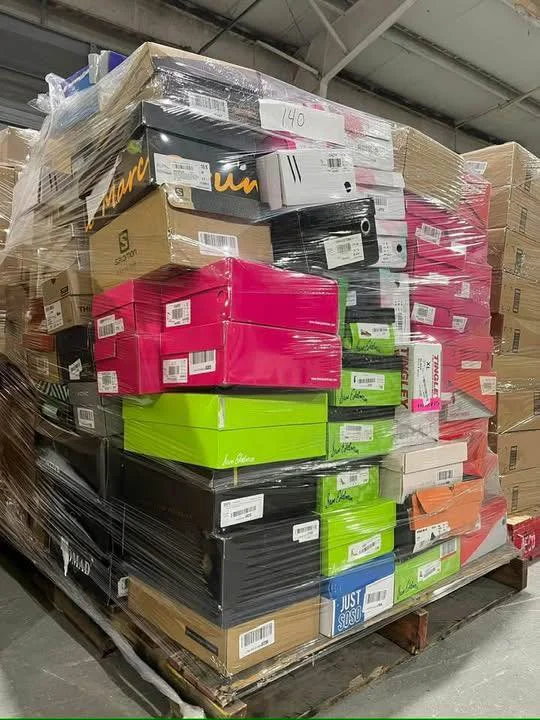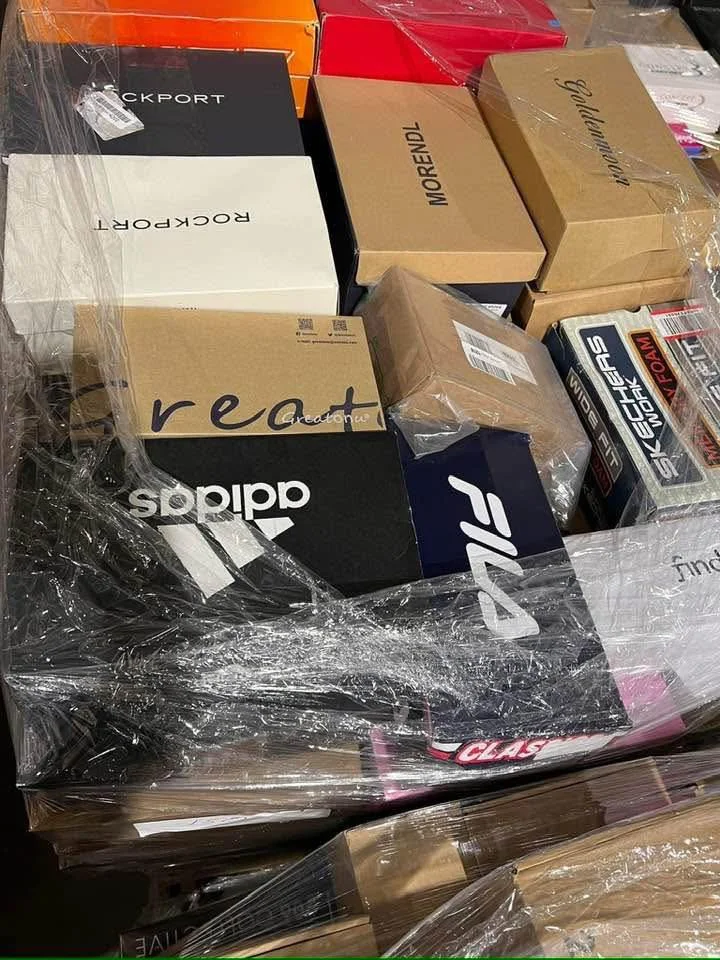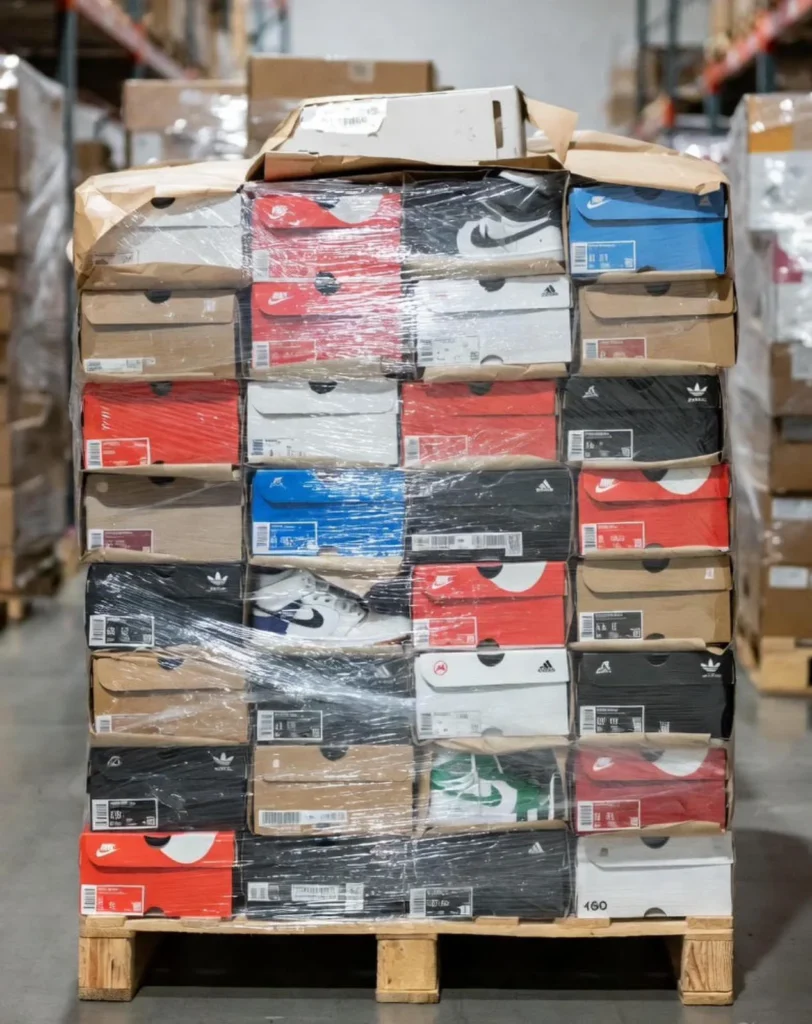
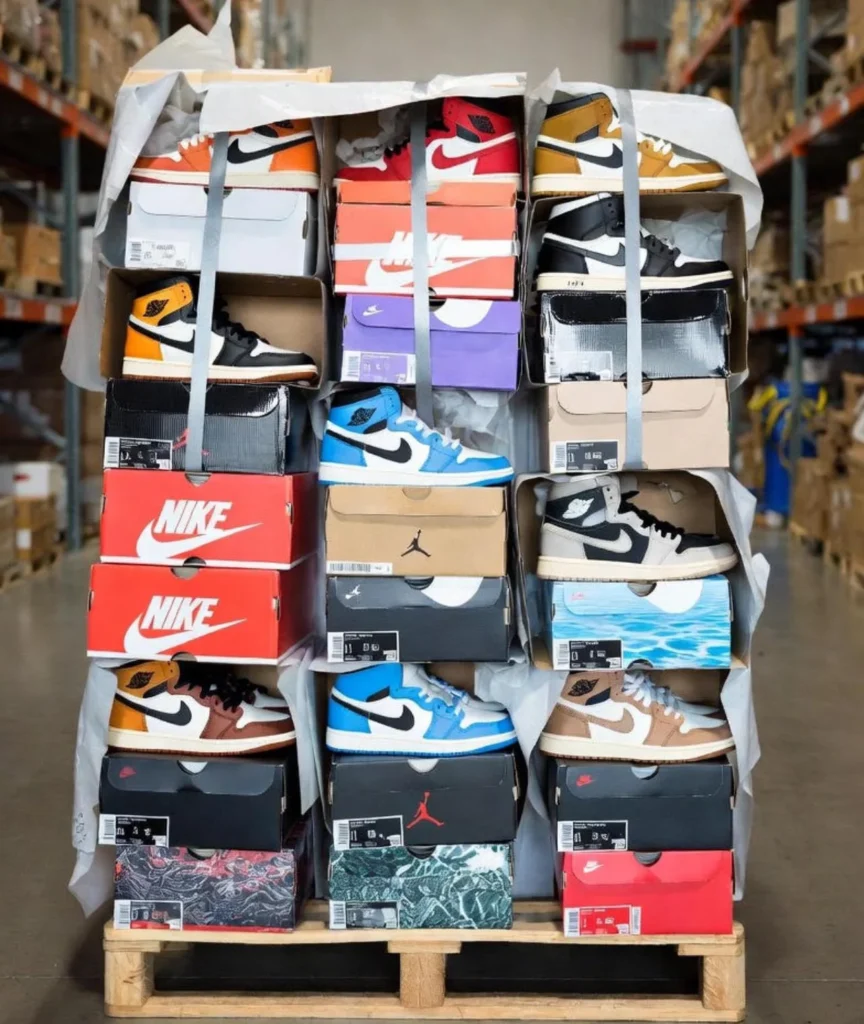
What Comes Inside Shoes And Sneakers Pallets?
Shoes and sneakers pallets are bulk lots of footwear sold by retailers, liquidation companies, manufacturers, and distributors. Shoes and sneakers pallets are bulk lots of footwear sold by retailers, liquidation companies, manufacturers, and distributors. Buyers looking to source inventory can explore different types of shoes and sneakers pallets for sale. These pallets usually contain mixed inventory ranging from athletic sneakers and casual footwear to boots, sandals, and branded shoes. For resellers, understanding pallet contents is important because inventory quality directly affects profit margins, customer satisfaction, and resale potential.
Whether you are buying for resale, exporting, or building an online footwear business, knowing what to expect inside a pallet helps reduce risk and improve purchasing decisions.
Understanding Shoes and Sneakers Pallets
A footwear pallet is a grouped collection of products packed together and sold in bulk quantities. Inventory often comes from:
- Customer returns
- Shelf pulls
- Overstock inventory
- Seasonal clearances
- Packaging changes
- Store closures
- Manufacturer surplus
Most pallets are sold either manifested or unmanifested.
Manifested Pallets
Manifested pallets include detailed inventory lists showing:
- Brand names
- Product quantities
- Shoe sizes
- Estimated retail values
- Product categories
These pallets provide greater transparency and lower risk.
Unmanifested Pallets
Unmanifested pallets do not include detailed inventory lists.
Benefits include:
- Lower buying cost
- Higher upside potential
- Access to surprise inventory
Risks include:
- Unknown product mix
- Size imbalance
- Possible damaged inventory
Types of Footwear Commonly Found Inside Shoe Pallet Inventory
Most shoe pallet inventory includes a mix of footwear categories.
Athletic Sneakers
Athletic sneakers are among the most desirable pallet items because they typically have strong resale demand. Buyers specifically looking for sneaker-heavy inventory often choose mixed sneakers pallets because they provide a larger concentration of athletic footwear.
Examples include:
- Running shoes
- Basketball shoes
- Walking shoes
- Training shoes
- Lifestyle sneakers
Popular branded athletic footwear often sells faster due to market demand.
Casual Shoes
Casual footwear appears frequently because retailers carry large quantities year-round. Women’s footwear categories are also common in liquidation inventory, and buyers seeking female-focused inventory can explore ladies mixed shoes pallets.
Examples:
- Slip-ons
- Loafers
- Canvas shoes
- Everyday sneakers
- Flats
Boots
Boots often appear during seasonal transitions.
Common categories include:
- Work boots
- Winter boots
- Fashion boots
- Hiking boots
- Safety footwear
Sandals and Open Footwear
Warmer weather inventory commonly includes:
- Slides
- Flip flops
- Sport sandals
- Casual sandals
Children’s Footwear
Many sneaker liquidation pallets contain children’s products because retailers sell large volumes annually.
Typical categories:
- School shoes
- Kids sneakers
- Infant shoes
- Baby footwear
What Conditions Are Shoes Usually In?
Inventory condition varies significantly depending on source.
Brand New Inventory
This is the most valuable category.
Usually includes:
- Overstock products
- Excess retailer inventory
- Shelf pulls
These products typically include original packaging.
Customer Returns
Customer return pallets may include:
- Open boxes
- Minor wear
- Wrong sizes
- Damaged packaging
Many returned products remain functional and resellable.
Shelf Pulls
Shelf pulls refer to products removed from retail stores.
Common reasons include:
- Packaging updates
- Seasonal changes
- Discontinued styles
- New inventory arrivals
Shelf pulls are often among the best value categories.
Damaged Inventory
Some pallets contain damaged products.
Potential issues:
- Missing laces
- Scratches
- Dirty soles
- Broken packaging
Experienced buyers account for small damage rates when calculating profitability.
How Many Pairs Come Inside Shoes and Sneakers Pallets?
The number varies depending on:
- Pallet size
- Box dimensions
- Product type
- Packaging method
Typical ranges include:
Small pallets:
- 50–100 pairs
Medium pallets:
- 100–250 pairs
Large pallets:
- 250–500+ pairs
Sneakers generally occupy more space than sandals or lightweight footwear.
What Brands Can Be Found?
Brand availability changes constantly depending on supply.
Common categories include:
Athletic Brands
Often include:
- Running brands
- Performance brands
- Lifestyle sneaker companies
Fashion Brands
Common examples:
- Designer-inspired labels
- Department store brands
- Fast fashion footwear
Private Label Brands
Retailers frequently liquidate store-exclusive brands.
These may offer:
- Higher margins
- Less competition
- Lower acquisition costs
Understanding Sneaker Liquidation Pallets
Sneaker liquidation pallets specifically focus on athletic footwear and sneaker categories.
These pallets are attractive because:
- Strong resale demand
- Large online marketplaces
- International export opportunities
- Repeat customer potential
Common sources include:
- Retail returns
- Excess warehouse inventory
- Distributor closeouts
- Marketplace returns
Buyers targeting sneaker liquidation pallets should pay close attention to sizing distribution because unusual sizes may sell slower.
How Sizes Are Distributed Inside Pallets
One of the biggest mistakes new buyers make is ignoring size distribution.
Look for balanced quantities across:
- Small sizes
- Medium sizes
- Large sizes
- Wide fit options
Problems occur when pallets contain:
- Too many uncommon sizes
- Large quantities of one style
- Missing size ranges
Balanced sizing improves turnover rates.
Real Example: What a Typical Footwear Pallet Might Contain
A mixed footwear pallet may include:
- 70 athletic sneakers
- 45 casual shoes
- 25 boots
- 20 sandals
- 15 kids shoes
- 10 specialty products
Total:
185 pairs
Estimated retail values may range widely depending on brand mix and condition.
Experienced resellers focus more on sell-through rates rather than retail estimates.
How To Evaluate Shoe Pallet Inventory Before Buying
1. Verify Manifest Details
Check:
- Brand names
- Quantities
- Condition grades
- Retail estimates
2. Calculate Cost Per Pair
Simple formula:
Pallet price ÷ Number of pairs
Lower acquisition cost generally creates higher margins.
3. Check Shipping Costs
Large footwear pallets can become expensive due to:
- Weight
- Dimensions
- Freight charges
Shipping sometimes changes profitability more than inventory itself.
4. Understand Return Policies
Good suppliers provide:
- Clear conditions
- Manifest accuracy
- Customer support
5. Start Small
New buyers should avoid large truckloads immediately.
Smaller purchases allow testing:
- Product quality
- Sales speed
- Supplier reliability
Expert Recommendations For Buying Shoes and Sneakers Pallets
Experienced buyers typically follow several rules:
Buy Consistently From Reliable Suppliers
Consistency creates:
- Better forecasting
- Lower risk
- Repeat profitability
Focus On Categories You Understand
Selling everything creates complexity.
Specializing helps improve:
- Pricing accuracy
- Faster listings
- Better margins
Inspect Inventory Quickly
Footwear inventory moves faster when processed immediately.
Best practice:
- Sort products
- Photograph inventory
- List products quickly
Track Sell Through Rate
Profitability depends more on turnover than retail value.
Measure:
- Days to sell
- Average profit per pair
- Repeat demand
Are Shoes and Sneakers Pallets Worth Buying?
For many resellers, yes.
Advantages include: Understanding which products generate stronger margins is important when evaluating footwear inventory. Many resellers also research the most profitable items to resell from pallets before purchasing inventory.
- High product demand
- Repeat customers
- Multiple sales channels
- Export opportunities
Potential disadvantages:
- Size imbalance
- Condition variability
- Shipping costs
- Brand inconsistency
Success usually depends on buying discipline rather than luck.
Conclusion
Shoes and sneakers pallets can provide strong opportunities for resellers when purchased correctly. Understanding inventory types, product conditions, sizing distribution, and supplier quality makes a major difference in profitability. Buyers who learn how shoe pallet inventory works and focus on consistent sourcing usually perform better over time. If you are new to reselling, learning how to start a liquidation pallet business can also help you avoid common mistakes when purchasing inventory.
Rather than focusing only on low prices, successful buyers evaluate product quality, turnover speed, and long-term margins before purchasing.
What comes inside shoes and sneakers pallets?
Most pallets contain mixed footwear such as athletic sneakers, casual shoes, boots, sandals, and children’s footwear. Inventory condition varies depending on the source.
Are sneaker liquidation pallets profitable?
Sneaker liquidation pallets can be profitable when buyers understand inventory quality, sizing distribution, shipping costs, and resale demand.
How many pairs are usually inside a shoe pallet inventory load?
Small pallets may contain 50–100 pairs while larger pallets may include 250–500 or more pairs.
Are shoes inside pallets new or used?
Inventory can include new products, customer returns, shelf pulls, overstock inventory, and occasionally damaged products.
Should beginners buy manifested pallets?
Manifested pallets are generally better for beginners because inventory lists reduce uncertainty.
Where do shoe liquidation pallets come from?
Most inventory comes from retailers, distributors, customer returns, store closures, overstock inventory, and warehouse excess stock.