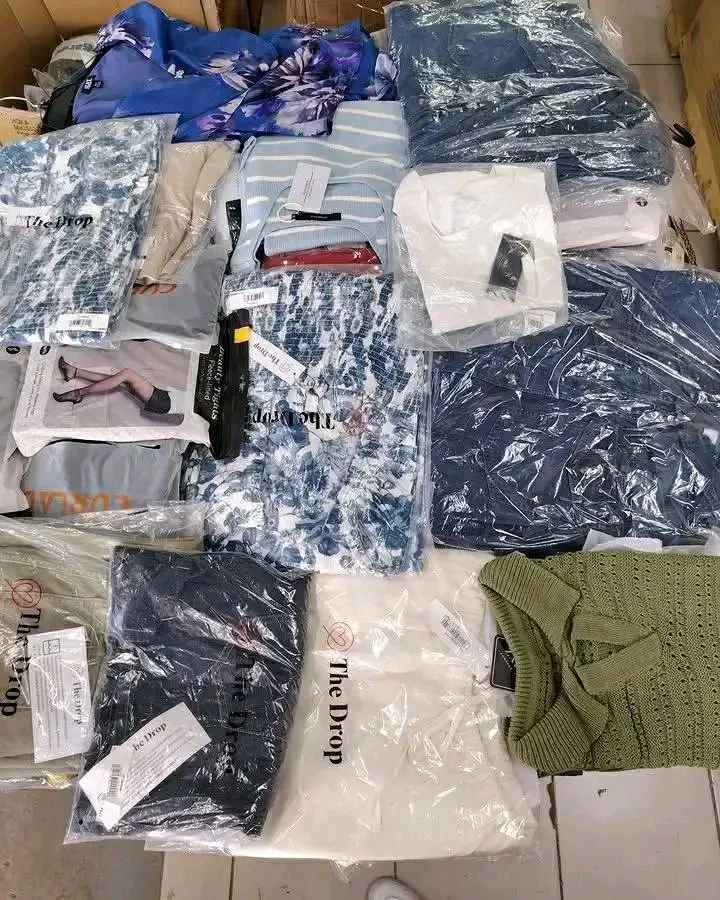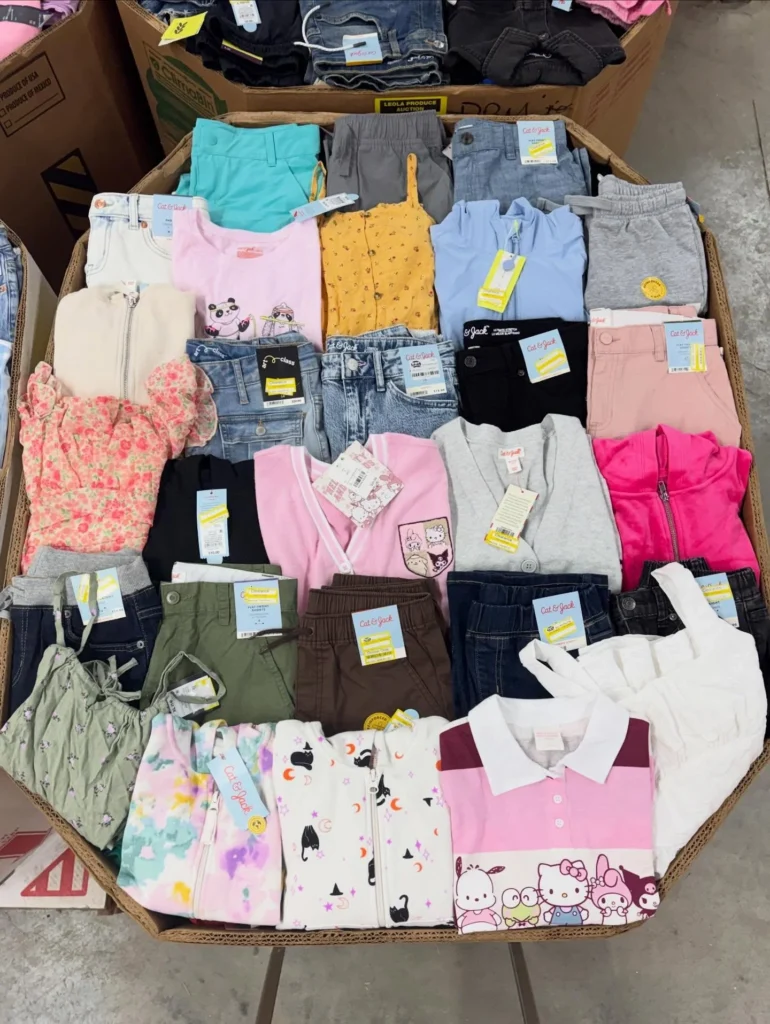
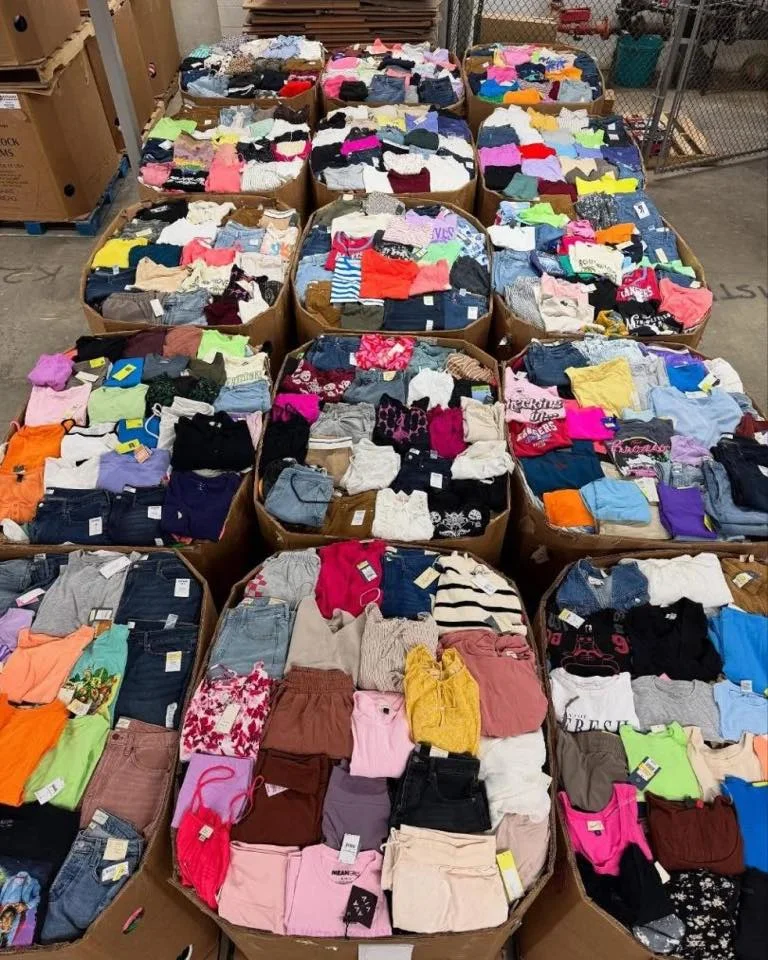
Buying baby clothing pallets for resale has become one of the most lucrative ventures in the liquidation and resale ecosystem. Navigating the world of bulk inventory requires a balance of market knowledge, realistic financial planning, and a deep understanding of what parents actually look for when buying secondhand or discounted apparel. The baby and toddler apparel market is remarkably resilient, primarily because children constantly outgrow their clothes within months. For an entrepreneur building a baby pallet business, this constant cycle of out-growth guarantees continuous consumer demand.
However, turning a profit requires more than simply buying a pallet and listing items online. Success depends heavily on the quality of your supplier, your understanding of processing costs, and your ability to market your inventory to the right buyers. This comprehensive guide breaks down the true profitability of liquidation baby apparel, providing actionable insights to help you build a sustainable operation. Baby clothing pallets for resale
The Economics of a Baby Pallet Business: Market Demand and Margins
To evaluate whether liquidation apparel is worth the initial investment, you must analyze the underlying numbers. Unlike adult fashion, which is heavily dictated by shifting seasonal trends and complex sizing preferences, baby clothing is highly standardized and driven entirely by utility.
Constant Consumer Demand
Infants typically go through roughly seven size changes in their first two years of life. This rapid progression means that parents face perpetual expenses to keep their children dressed. When household budgets tighten, consumers increasingly turn to local resellers, consignment shops, and online platforms to find high-quality garments at a fraction of standard retail prices. By securing wholesale lots, you position your business to fulfill this essential market need. Baby clothing pallets for resale
Exceptional Piece Counts Per Pallet
One of the greatest advantages of investing in a baby apparel pallet is the sheer density of the product. A standard pallet of adult winter coats might only contain 100 to 150 pieces due to the bulkiness of the fabric. Conversely, a dedicated pallet of infant clothing can easily contain between 1,000 and 3,000 individual items.
Because liquidation inventory is bought by the pallet or by weight, your average cost per piece can drop significantly, sometimes to less than $1.00 per item. When you can acquire an item for under a dollar and resell it for $5.00 to $12.00, your potential profit margins scale rapidly.
Evaluating Inventory Types: Overstock vs. Customer Returns
When source-hunting for your baby resale inventory, you will encounter different classifications of liquidation merchandise. Understanding these distinct grades is crucial to calculating your potential return on investment (ROI).
Shelf Pulls and Overstock
Shelf pulls and overstock items represent the gold standard for apparel resellers. These are items that were never purchased by a consumer. Instead, they were removed from major retail store shelves to make room for incoming seasonal collections or new brand rollouts.
- Pros: The vast majority of these items arrive brand new with tags (NWT) attached. They are clean, unwashed, and completely free of wear and tear.
- Cons: These lots generally carry a higher upfront purchase price because the supplier knows the retail value remains intact.
For a reliable foundational mix of clean, ready-to-sell inventory, many professional liquidators choose to invest in a premium mixed baby pallets program, which balances diverse clothing styles with fast-moving essential accessories.
Customer Returns
Customer return pallets contain items purchased by consumers and subsequently brought back to the retailer. Our baby clothing pallet offers a wide selection of newborn and infant apparel designed for everyday wear. Babies grow quickly, which means parents are constantly buying new clothes, creating continuous demand.
- Pros: These lots are significantly cheaper to buy upfront, allowing you to secure a massive amount of volume for a very low initial capital outlay.
- Cons: The condition of the inventory can vary wildly. You must expect a certain percentage of the load to feature missing tags, minor stains, or opened packaging.
Salvage Grade
Salvage lots consist of items deemed unfit for immediate retail display by the original store. This grade frequently includes heavily stained items, torn garments, or broken zippers. For the vast majority of resellers, salvage lots should be avoided, as the labor required to repair and wash the items quickly eats away at your net profits.
Step-by-Step Strategy to Process and Profit from Baby Clothes Pallets
To run a highly efficient operation, you need a structured processing system. You cannot simply flip open a box and expect immediate sales; inventory management requires a systematic approach from the moment the delivery truck arrives.
[Pallet Arrival] ➔ [Unboxing & Sorting] ➔ [Inspection & Grading] ➔ [Sanitization/Prep] ➔ [Listing & Multi-Channel Sales]
1. Unboxing and Initial Sorting
When your shipment arrives, your immediate priority is sorting the items by size and type. Group the inventory into logical categories:
- Newborn to 3 Months
- 3 to 6 Months
- 6 to 12 Months
- Toddler sizes (2T through 5T)
Simultaneously, separate basic essentials like onesies and bodysuits from premium outwear, sleepwear, and formal matching sets.
2. Rigorous Quality Inspection
Examine every garment under bright, clear lighting. Check the critical wear areas: the neckline, cuffs, and the inner snap seams. Sort the items into three operational tiers:
- Tier A (Pristine/NWT): Items with original retail tags intact. These will command the highest price point and should be prioritized for premium online marketplaces.
- Tier B (Excellent/Like New): Items that are completely clean but missing tags. These are perfect for local bundle deals or consignment sales.
- Tier C (Defected/Needs Work): Items with minor loose threads, washable smudges, or missing buttons. Set these aside for bulk clearance or quick stain-treatment sessions.
3. Sourcing Strategy and Specialized Lots
To maintain a balanced business, you must diversify your inventory offerings. While everyday wear forms the core of your catalog, expanding into specific high-volume necessities can greatly stabilize your seasonal revenue. For example, focusing a portion of your capital on a dedicated baby clothing pallet allows you to capture specialized, high-margin items like organic sleep sacks and seasonal cold-weather playsuits.
Furthermore, smart business owners know that apparel is only one part of the parenting equation. Integrating highly consumables into your mix by sourcing baby diapers pallets provides an excellent cross-selling opportunity. Parents who buy affordable clothing bundles will gladly add diapers to their order, increasing your average transaction value and driving consistent repeat business. If you’re looking for a reliable and profitable inventory source, Clothing & Apparel Pallets are one of the best-selling categories in the resale market today. Whether you are just starting your resale business or scaling to truckloads, these pallets offer a consistent supply of high-demand products that sell quickly across multiple platforms.
Hidden Costs of Liquidation: Guarding Your Net Margins
Many beginners look strictly at the wholesale cost of a pallet and assume the entire difference is pure profit. To ensure long-term business survival, you must account for the operational expenses that cut into your gross revenue.
Gross Resale Revenue
  └── MINUS Pallet Purchase Cost
  └── MINUS Inbound Freight Shipping
  └── MINUS Storage & Poly Mailers
  └── MINUS Platform Selling Fees
  =================================
  EQUALS NET PROFIT
Inbound Freight Charges
A pallet of baby clothes is heavy and dense. Residential delivery with a liftgate service can add $150 to $300 or more to your total cost if you are not careful. Always calculate freight costs into your initial unit expenses before finalizing a purchase. If a pallet costs $500 and shipping costs $250, your true investment base is $750.
Packaging and Processing Supplies
To sell clothing professionally online, you need top-tier presentation. This requires purchasing high-quality clear poly bags, professional hanging racks, accurate shipping scales, and a reliable thermal label printer. Furthermore, you must factor in the cost of gentle, hypoallergenic stain removers to restore Tier C items to marketable condition.
Digital Platform Fees
Whether you utilize eBay, Poshmark, Mercari, or specialized platforms like Vinted, each marketplace takes a percentage of your total sale price. These fees typically range from 10% to 15%, plus fixed payment processing costs. If you choose to sell locally via Facebook Marketplace or local pop-up markets, your platform fees drop to zero, but you trade that financial savings for the time spent meeting buyers face-to-face.
Maximizing ROI: High-Converting Sales Channels for Baby Inventory
To turn over your baby clothing pallets for resale swiftly, you should implement a multi-channel sales strategy. Holding onto inventory for months drags down your cash flow; your goal should always be high-velocity liquidation.
| Sales Channel | Best For | Fee Structure | Audience Reach |
| Poshmark & Mercari | Premium Brands & Boutique Sets | 10% – 20% | Nationwide / Highly Targeted |
| eBay Store | High-Volume Multi-Quantity Listings | ~13.2% + Fixed | Global Marketplace |
| Facebook Marketplace | Low-Cost Bulk Variety Bundles | 0% (Local Pickup) | Local Community Parents |
| Local Consignment Events | Clearing Seasonal Excess Stock | 30% – 40% Event Cut | Concentrated Local Shoppers |
Mastering the Art of the “Baby Bundle”
Low-dollar, single-item listings can consume an unsustainable amount of time. Listing a single onesie for $3.00 requires photography, description writing, packaging, and a trip to the post office, which quickly erodes your hourly return on labor.
Instead, leverage your high piece counts by creating curated “Growth Bundles.” Group 10 to 15 items of the exact same size together (for example, a complete “6-12 Months Summer Bundle”) and sell the entire lot for $30 to $45. This increases your average order value, accelerates your inventory turnover, and saves your customers money on shipping fees.
Real-World Example: A Profitable Transformation
Consider the real-world operational blueprint of a mid-sized reseller operating out of Columbus, Ohio. She initially launched her boutique with small wholesale lots but quickly realized she needed more volume to satisfy her growing customer base. She decided to upscale her sourcing by investing directly in comprehensive baby clothes pallets to secure bulk pricing.
The Financial Breakdown:
- Initial Investment: $650 for a high-density, manifested baby apparel pallet.
- Inbound Freight Shipping: $200 (delivered straight to a commercial storage unit).
- Total Financial Outlay: $850.
- Total Manifested Count: 1,100 pieces (Average unit cost: $0.77 per item).
The Sorting & Processing Strategy:
Upon processing the shipment, she discovered that 75% of the items were pristine shelf pulls with original retail tags intact. Another 20% were mint-condition items missing their tags, while a small 5% possessed minor, easily fixable manufacturing blemishes or washable dust markings from storage.
She listed the premium, brand-new matching sets individually on online platforms, pricing them at a flat 50% discount relative to traditional retail MSRP. The basic essential items were compiled into curated wardrobe bundles and sold directly through local parenting groups.
Within 45 days of intense processing and regular posting, she generated $2,400 in gross revenue. After subtracting her initial $850 acquisition cost and roughly $250 in platform transaction fees and packaging supplies, she cleared a net profit of $1,300 on her very first pallet transaction. She immediately reinvested that capital into two additional loads, scaling her side-hustle into a highly dependable, full-time operation. If you’re looking to grow your resale business with fast-selling inventory, our Spring Summer Clothing Pallets for Sale are exactly what you need. These pallets are carefully sourced from major retailers and include a wide mix of trendy, seasonal apparel that customers are actively searching for. Baby clothing pallets for resale
Is It Right For You? Final Expert Verdict
Investing in liquidation apparel is absolutely worth it if you approach the industry with a clear business plan and a strong work ethic. It is not a passive source of income; it requires physical labor, consistent product listing, and careful quality control.
If you have the physical space to store and process large boxes, a small amount of starting capital, and the patience to organize and photograph small garments, this business model offers an incredibly high return on investment. The low cost per piece insulates you from severe financial risk, while the constant, recession-proof nature of the children’s apparel market ensures that your processed inventory will always find a eager buyer. Prime Source Pallets offers high-quality Nordstrom liquidation pallets and Nordstrom wholesale pallets for resellers, retail stores, online sellers, exporters, flea market vendors, and wholesale buyers across the United States.
1. What is the average profit margin when reselling baby clothing pallets?
Gross profit margins typically range between 50% and 70% after accounting for the initial cost of the pallet. Net profit margins usually settle between 30% and 45% once you subtract inbound freight shipping costs, packaging materials, and e-commerce platform listing fees.
2. Do liquidation baby clothing pallets come with a manifest?
It depends entirely on the supplier you choose. Manifested pallets include an itemized spreadsheet detailing the exact brand, size, style, and retail value of every piece in the lot. Unmanifested pallets are sold blindly at a deeper discount, offering a higher risk-to-reward ratio for experienced buyers.
3. How do I handle stained or damaged items found in a pallet?
You should expect a minor defect rate of 3% to 8% on liquidation loads. Minor stains can often be removed with a quick soak in an eco-friendly oxygen bleach solution. Items with permanent defects can be bundled as low-cost “play clothes” lots or donated to charities for a tax write-off.
4. What are the best online marketplaces to resell baby clothes?
For premium, high-end, or brand-new designer baby brands, Poshmark, Instagram boutique pages, and Mercari yield the highest prices. For high-volume everyday essentials, multi-item listings on eBay or local local pickup bundles via Facebook Marketplace move the fastest.
5. How much storage space do I need to start a baby pallet business?
Because baby clothes are incredibly compact, you do not need an industrial warehouse to begin. A standard home garage, a clean basement, or even a spare bedroom provides more than enough real estate to store, sort, photograph, and pack several hundred items efficiently.
6. Are there specific baby clothing brands that perform better in resale?
Yes. Highly recognized retail brands like Carter’s, OshKosh, and Cat & Jack provide consistent, fast-moving sales. Premium boutique options like Bamboo-based brands (Posh Peanut, Kyte Baby, Little Sleepies) command incredible resale values, often fetching near-retail prices on the secondhand market.